Table Of Content

You need at least one working copy of the gene to be able to see red and green. Since boys have just one X-chromosome, which they receive from their mother, inheriting one defective copy of the gene will render them colorblind. Girls have two X-chromosomes; to be colorblind they must inherit two defective copies, one from each parent. Consequently, red-green colorblindness is much more frequent in boys (1 in 12) than in girls (1 in 250). Red-green colorblindness is caused by a single gene located on the X-chromosome.
The Role of Mitochondrial Genetics in Aging
Many believe that treatments like relaxers, keratin treatments, or Brazilian blowouts can permanently turn curly hair straight. There’s a long-standing myth that curly hair is seen as less professional or more disorderly, especially among people of color. This idea might come from historical and cultural biases where curly hair has been viewed negatively. There are even some rare hair conditions that are caused by specific genetic changes, like monilethrix, which makes hair brittle, and uncombable hair syndrome, which makes hair dry and hard to manage.
I didn't feel pretty unless my hair was straight - SBS
I didn't feel pretty unless my hair was straight.
Posted: Wed, 09 Jan 2019 08:00:00 GMT [source]
The Integumentary System: Understanding Skin Physiology
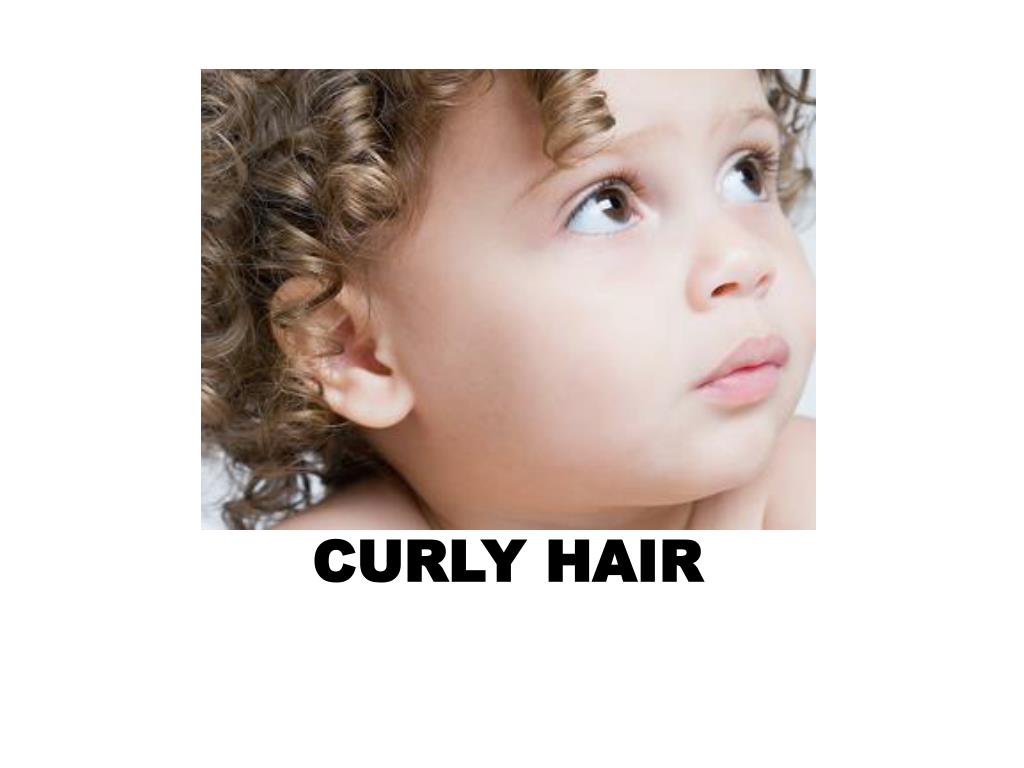
With curly hair types starting at 3A, using a sulfate-free shampoo and a conditioner with slip is a great way to moisturize and detangle without adding weight to your hair. Curly hair, often a topic of genetic intrigue, sparks curiosity about its inheritance. Contrary to common belief, even parents with straight hair can indeed have curly-haired offspring.
Why Do Some People Look More Like Their Grandparents?
After all, our hair tells a story of our heritage, our life experiences, and our unique genetic tapestry. How we care for our hair, from the products we use to the methods of styling, can also impact its texture. Overuse of heat tools, chemicals, or harsh treatments can damage the hair shaft, potentially altering its natural state. Embracing a hair care routine tailored to your specific hair type and needs can help preserve its natural beauty and health.
The Genetic Basis of Curly Hair
For example, how does the tensile strength of curly hair compare with that of non-curly hair? Currently, most of the comparative studies use different populations or races, and not degree of curliness, as the comparison discriminant. Distinguishable behavioural layers or classes include the physical, mechanical, absorption, growth, ultrastructural changes and biochemical changes layers. Depending on the interests of the specific discipline, the absorption responses may be intertwined with any of the other layers on the behaviour level. For example, forensic and medical scientists may be interested in the biochemical changes of the fibre, while engineering sciences may be interested in mechanical and ultrastructural changes after fibre absorption. The growth layer provides a platform for positive and negative growth rate studies.
That is because the curly headed parents, CC, can only contribute a C gene and the straight haired parent, only an s gene. Embracing all hair types encompasses a deep appreciation for the genetic variations that manifest in different ethnicities, reflecting centuries of human migration and evolution. Recognizing these diverse expressions of heritage provides a foundation for celebrating natural beauty in its myriad forms. The cultural significance of curly hair extends beyond physical appearance, deeply connecting us to our roots and ethnicity.
This indicates the necessity to differentiate between degrees of fibre curliness in order to gain a more accurate understanding of hair fibres. In our opinion, a practical taxonomy needs to be uncomplicated to facilitate easy, yet accurate, use. The above-mentioned six-point scale [69] and modified-STAM [68] appear to support these requirements. More appropriate descriptions, for straightforward classification of large datasets, could be ‘stick straight’, ‘near straight’, ‘wavy’, ‘wavy, big curls’, ‘small curls, frizzy, kinky, afro’, ‘tight, interwoven small curls'. As already mentioned, curly hair is an autosomal dominant trait, which means that one of the parents has straight hair, while the other has curly hair.
What Aspects Of Hair Are Genetic?

Widow's peak is likely controlled by genes rather than the environment. But while hairline shape tends to run in families, its pattern of inheritance is usually unpredictable, suggesting that multiple genes are involved. For eye color, I'll refer you to two questions we've answered previously.
Discovering the Answer to Who Are My Ancestors
The recessive gene is the gene that is not expressed when two genes are inherited for the same trait. A couple of different studies found that different versions of this gene could account for around 6% of hair curliness. Let's say there are ten genes involved in deciding whether hair is curly, wavy, or straight. To make the explanation simpler, from now on the curly version will be C and the straight version S.
In the curly fibre bulb, Ki-67-positive matrix cells are visible above the Auber line on the convex side of the matrix. These cells have a homogeneous spread below the Auber line for straight hair. More pronounced cellular expressions can also be seen in the CTS, IRS and ORS on the follicle concave side of the curly hair. In straight hair, the CTS, IRS and ORS structures have a symmetrical lengthwise appearance. Evidence of asymmetrical expression of certain keratins and enzymes is also seen in curly fibres, whereas expression in straight fibres appears to be symmetrical. For example, there is evidence of more pronounced concave side expression of K14 and transglutaminase-1 in the ORS and IRS, respectively [31].
There are some human traits and health conditions that are determined by the genes passed through the sex chromosomes (X and Y chromosomes). Typically, a dominant gene is one that overpowers a recessive gene when two different characteristics are present in one piece of DNA. The dominant gene will become the visible trait in the person born with both characteristics in their DNA.



No comments:
Post a Comment